- Ekochamber
- Posts
- The Danger of “No Risk” Thinking
The Danger of “No Risk” Thinking
Your Daily Eko
🧠 Insights You Won’t Forget
Today's insights are inspired by a recent episode of My First Million w/ Howard Marks
Risk is Behavioral, Not Structural
Howard Marks stresses that markets themselves aren’t inherently risky; people’s behavior is. Excess optimism drives bubbles, while panic drives bargains. Smart investors must detach from herd psychology and act counter-cyclically.
The Danger of “No Risk” Thinking
The riskiest belief in markets is that there is no risk. Periods of complacency create fragile conditions. Marks highlights that the greatest threats emerge when investors assume safety is guaranteed.
Cycles Are About Odds, Not Certainty
In Mastering the Market Cycle, Marks explains that investors can’t predict the future, but they can improve odds by understanding where they are in the cycle. Recognizing extremes in sentiment and pricing helps tilt probabilities in your favor.
Zig When Others Zag
Echoing Buffett, Marks insists: when others are carefree, you must be cautious; when others are terrified, you must be bold. It’s emotionally difficult, but consistently profitable for those disciplined enough to follow it.
You Can’t Raise Money in a Crisis
Marks explains that capital must be raised before crises hit, because fear paralyzes investors. During 2008, Oaktree’s foresight in raising standby funds early allowed them to deploy billions while others froze.
Consistency Outperforms Heroics
Avoiding big mistakes compounds better than chasing home runs. Marks cites General Mills’ pension fund, which never broke the top 25% in performance but never fell below the top 50%. Over 14 years, it landed in the top 5%, simply by staying above average.
Investing Without Emotion
Marks argues successful investors act as if unemotional, even when fear or euphoria runs high. The greatest buying opportunities feel the worst in the moment, which is why most investors miss them.
Fewer Losers, Not More Winners
At Oaktree, the strategy is “always good, sometimes great, never terrible.” By minimizing downside rather than chasing upside, long-term compounding produces elite results.
Recall from last week
Stablecoins as the New Global Payment Rail
With The GENIUS Act enshrining stablecoins federally, Armstrong predicts an adoption “gold rush” across corporates. The mandate of 100% backing with Treasuries and audits shifts stablecoins from shadow instruments to trusted rails, making fast, cheap, global payments a mainstream expectation.
Building a Pro-Crypto Congress
Armstrong describes how Coinbase helped mobilize millions of U.S. crypto users into a voting bloc, unapologetically scoring politicians A–F and backing candidates across party lines. This contrarian, single-issue strategy delivered the most pro-crypto Congress to date.
💡 Eko Worth Remembering
“When the time comes to buy, you won’t want to.”
⚡ Active Recall – Test Yourself
Question: If the riskiest belief in markets is that there’s “no risk,” how might an investor build safeguards into their portfolio to protect against this complacency trap?
Eko’s Top Pods
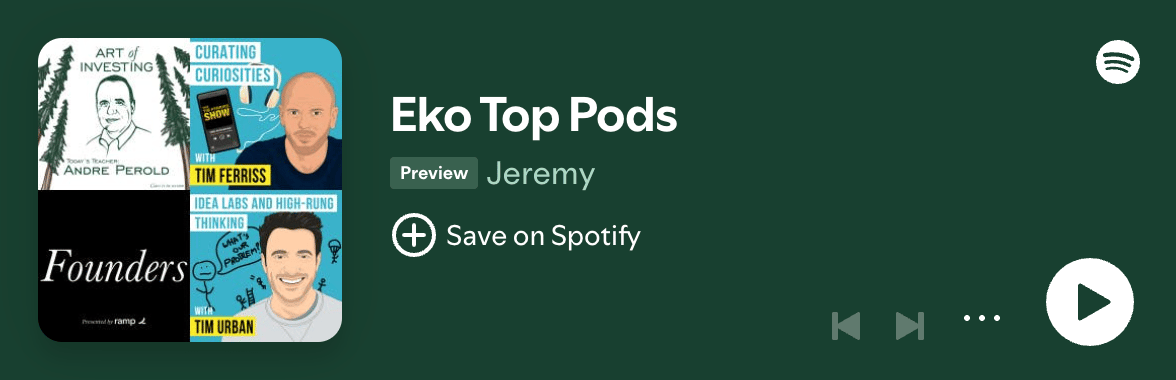
Reply with an episode suggestion. If added, you’ll get a shoutout from Eko!
Answer:
Diversify across asset classes, maintain liquidity for downturns, rebalance when valuations stretch, adopt a checklist to monitor market sentiment, and build rules that prevent emotional decision-making.
Enjoyed these insights? Forward this newsletter to a friend. Let’s grow smarter, together.
Reply